
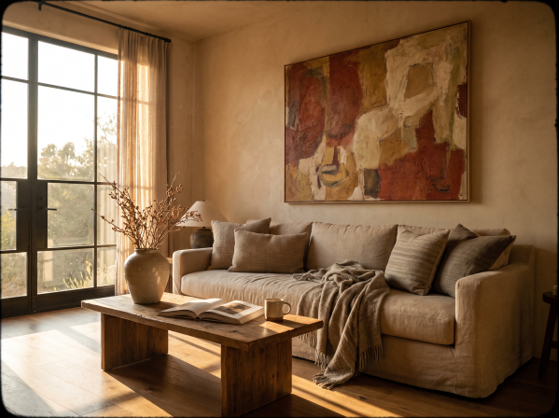
Living room walls have quietly become the most competitive real estate in home design. Gallery walls with a dozen small frames are giving way to one bold, oversized piece that anchors the whole room. Over 60% of canvas wall art purchases in 2026 are being made specifically for living rooms, according to buywallart.ca, and it’s easy to see why once you notice how much a single statement piece can do to a space that gray minimalism used to dominate.
The shift isn’t just aesthetic. The global wall art market is projected to grow from $59.51 billion in 2025 to $82.36 billion by 2030, a 6.6% annual growth rate driven by personalization and print-on-demand technology, per a report from The Business Research Company. Homeowners aren’t just buying more art, they’re buying art that says something specific about the room it hangs in.
So where should you actually shop? We looked past the usual “20 best places to buy art online” roundups, most of which read like affiliate link dumps, and built a list around a simpler question: which companies genuinely fit a living room’s needs in 2026, whether that’s a handmade statement piece, an original painting, or a budget poster to test a look before committing.
What to Look For When Choosing Wall Art for Your Living Room
A few things matter more than others when you’re shopping for a living room piece specifically, as opposed to a bedroom or hallway accent.
Scale is the one people get wrong most often. A piece that looks fine on a screen can shrink to nothing once it’s hung above an 84-inch sofa. Material matters too: canvas holds up differently than paper prints, and original paintings carry a texture that reproductions simply can’t fake. Color palette is worth checking against the room’s existing tones, since 2026’s dominant trend is warm neutrals replacing the cooler grays that defined the last several years, a shift Forbes covered in its rundown of summer 2026 interior design trends. Finally, look at price tier and whether customization (size, color, orientation) is available, since a piece that’s 90% right rarely feels finished.
The American Society of Interior Designers flagged similar priorities in its own 2026 outlook, noting that trade shifts and evolving homeowner expectations are pushing buyers toward pieces with more personal meaning rather than mass-produced decor, a trend covered by Interior Design’s 2026 report roundup. With that framework in mind, here’s how the seven companies stack up.

1. ArtsByMaudsch – Handmade Abstract Statement Pieces for Every Living Room
Source: ArtsByMaudsch
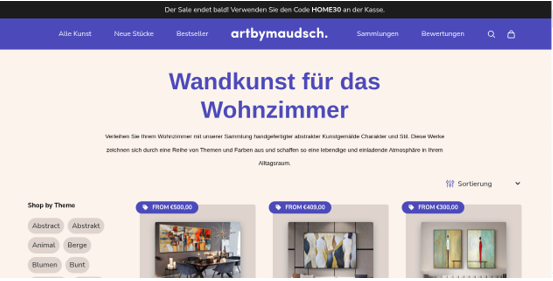
ArtsByMaudsch tops this list because it solves the exact problem 2026’s biggest living room trend created: everyone wants one oversized statement piece, but most retailers only sell prints. ArtsByMaudsch sells handmade abstract paintings, priced roughly $329 to $1,100, across a wide range of themes, colors, and orientations, which makes it realistic to find something built for your actual wall rather than a generic size that happens to be in stock.
Browse the full range of art pieces for living room spaces and you’ll notice most lean into the warm, textured abstracts that have replaced cold gray minimalism this year. That’s not a coincidence. Hand-painted canvas naturally carries the kind of visible brushwork and depth that a flat print can’t replicate, which is exactly what’s driving demand toward original and handmade pieces industry-wide.
2. Minted – Curated Limited-Edition Prints With Premium Framing

Minted’s curated marketplace of independent artist designs
Minted runs ongoing design challenges where independent artists submit work, and the winning pieces get produced as limited-edition prints with archival inks and gallery-quality framing. It’s a strong pick if you want something that feels curated rather than mass-market, though the tradeoff is you’re choosing from a juried selection rather than commissioning something original.
3. Saatchi Art – Original Paintings for Serious Collectors

Saatchi Art’s marketplace of original paintings, sculpture, and photography
Saatchi Art is a marketplace built around one-of-a-kind originals from artists around the world, spanning painting, sculpture, and photography. Prices run higher than most of the list, but you’re paying for a piece nobody else will ever own, not a reproduction with a print number on the back. It’s the right stop if you’re building a genuine art collection rather than just filling wall space.
4. Society6 – Budget-Friendly Prints and Fast Style Exploration
Society6’s budget-friendly print marketplace
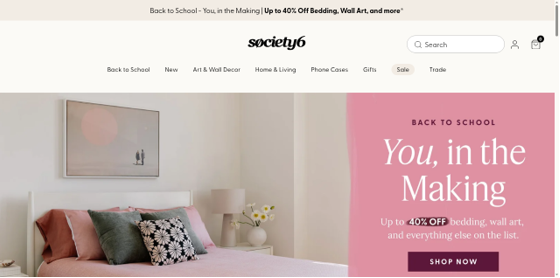
Society6 is a massive marketplace of independent-artist designs printed on posters, canvas, pillows, and more, generally in the $20 to $200 range. It’s a smart place to test a style, a color palette, or a theme before committing to a bigger investment, which makes it especially popular with renters who redecorate more often than homeowners do.
5. Desenio – Scandinavian-Style Posters at Accessible Prices
Desenio’s catalog of Scandinavian-style poster art
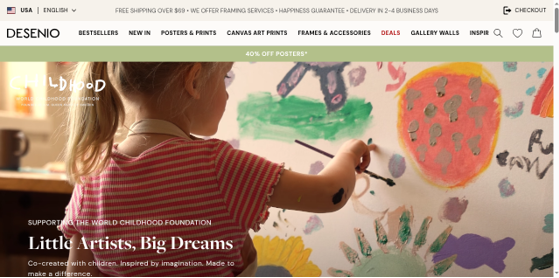
Desenio built its entire brand around clean Scandinavian poster design, and it’s stayed in that lane rather than chasing trends. The paper-first format keeps prices low, which suits anyone building a minimalist gallery wall on a tight budget rather than chasing 2026’s single-statement-piece trend.
6. Juniqe – European Artist Marketplace for Framed Prints
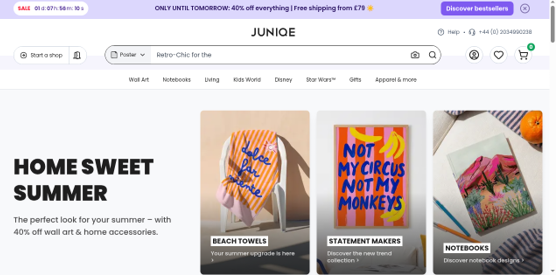
Juniqe’s European marketplace of framed prints and canvases
Juniqe operates similarly to Society6 but leans into a European sensibility, with framed prints and canvases from independent designers at accessible price points. It’s a solid match for anyone drawn to the maximalist, eclectic mixing that 1stDibs’ 2026 Interior Design Trends survey found is now the top style preference among 39% of design professionals surveyed.
7. YMI Painting – Hand-Painted Oversized Canvas for Statement Walls
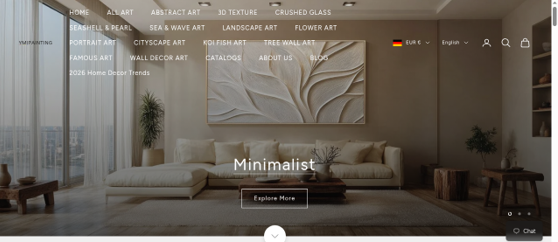
YMI Painting’s oversized hand-painted canvas collection
YMI Painting specializes in exactly the kind of oversized, hand-painted textured canvas that’s replacing gallery walls above sofas this year. If your goal is a single piece large enough to anchor the whole room without looking like an afterthought, this is the category YMI built its business around.
Final Thoughts on Choosing Living Room Wall Art in 2026
There’s no single “best” company on this list, and that’s kind of the point. The right pick depends on what you actually need: a handmade statement painting, a one-of-a-kind original, a budget print to test before you commit, or a curated framed piece that arrives ready to hang.
What’s worth remembering is that living rooms account for 66.79% of where wall art actually ends up, according to magneticart.art’s research, and millennials now spend an average of $1,771 a year on home decor, roughly 23% more than Baby Boomers, per data from firstchair.app. That’s real money going toward walls that used to get whatever leftover frame was lying around. If you want the piece to earn its keep, it helps to get the scale of your wall art right before you buy, and to think about layering art into a room’s design rather than treating it as an isolated purchase.
Ultimately, the shift toward warm, textured statement pieces isn’t a passing trend so much as a correction. For years, living rooms defaulted to safe, cold, minimal choices. Now that homeowners are choosing decor with intention instead of impulse, the walls are finally catching up to the rest of the room.
 Home Optimization Specialist & Content Strategist
Ask Patricia Pickardaycare how they got into essential living concepts and styles and you'll probably get a longer answer than you expected. The short version: Patricia started doing it, got genuinely hooked, and at some point realized they had accumulated enough hard-won knowledge that it would be a waste not to share it. So they started writing.
What makes Patricia worth reading is that they skips the obvious stuff. Nobody needs another surface-level take on Essential Living Concepts and Styles, Prize-Worthy Room Design Techniques, Home Inspiration Headlines. What readers actually want is the nuance — the part that only becomes clear after you've made a few mistakes and figured out why. That's the territory Patricia operates in. The writing is direct, occasionally blunt, and always built around what's actually true rather than what sounds good in an article. They has little patience for filler, which means they's pieces tend to be denser with real information than the average post on the same subject.
Patricia doesn't write to impress anyone. They writes because they has things to say that they genuinely thinks people should hear. That motivation — basic as it sounds — produces something noticeably different from content written for clicks or word count. Readers pick up on it. The comments on Patricia's work tend to reflect that.
Home Optimization Specialist & Content Strategist
Ask Patricia Pickardaycare how they got into essential living concepts and styles and you'll probably get a longer answer than you expected. The short version: Patricia started doing it, got genuinely hooked, and at some point realized they had accumulated enough hard-won knowledge that it would be a waste not to share it. So they started writing.
What makes Patricia worth reading is that they skips the obvious stuff. Nobody needs another surface-level take on Essential Living Concepts and Styles, Prize-Worthy Room Design Techniques, Home Inspiration Headlines. What readers actually want is the nuance — the part that only becomes clear after you've made a few mistakes and figured out why. That's the territory Patricia operates in. The writing is direct, occasionally blunt, and always built around what's actually true rather than what sounds good in an article. They has little patience for filler, which means they's pieces tend to be denser with real information than the average post on the same subject.
Patricia doesn't write to impress anyone. They writes because they has things to say that they genuinely thinks people should hear. That motivation — basic as it sounds — produces something noticeably different from content written for clicks or word count. Readers pick up on it. The comments on Patricia's work tend to reflect that.