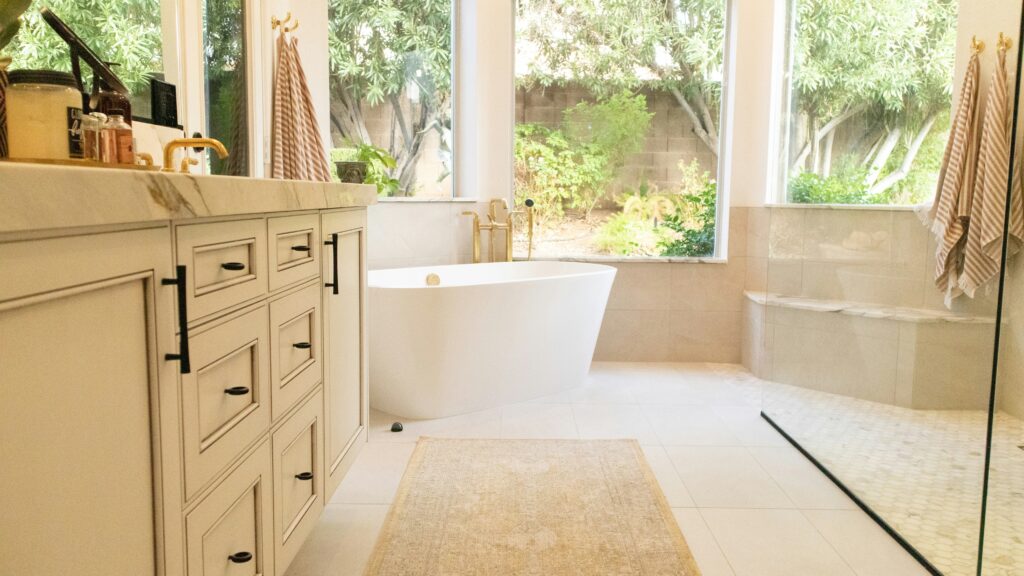
Choosing bathroom flooring is rarely as simple as finding a pattern you like at a big-box retailer. While homeowners naturally gravitate toward aesthetics, professional contractors view flooring as a structural engineering challenge. The material you select must actively resist standing water, perform safely under wet footing, and, most importantly, align with the physical limitations of your home’s underlying architecture. Ignoring these realities inevitably leads to cracked grout, buckling planks, and catastrophic water damage.
The Subfloor Dictates the Material
The most critical factor in your bathroom flooring decision is what lies beneath it. A massive housing stock observation we see nationwide is that 1970s split-level homes and turn-of-the-century builds frequently suffer from joist deflection—a structural “bounce” in the floor.
If you attempt to install heavy, rigid natural stone on a deflected subfloor, the mortar will inevitably crack. Context is everything here. Laying heavy travertine tile on a ground-level concrete slab in a Miami ZIP code like 33139 is structurally straightforward. However, attempting that same installation on the second floor of a historic rowhouse in Boston’s 02108 (Beacon Hill) requires extensive subfloor sistering and the mandatory installation of premium uncoupling membranes to absorb structural movement.
Porcelain vs. LVP: The Waterproofing Reality Check
The market is currently saturated with Luxury Vinyl Plank (LVP) marketed as “100% waterproof.” While the vinyl plank itself will not degrade in water, the seams are not watertight. If a plumbing leak or an overflowing bathtub forces water through the LVP click-lock seams, it becomes trapped against the wooden subfloor, breeding hidden mold.
For genuine, long-term wet zone performance, porcelain tile remains the undisputed champion. Insight from our internal project dataset reveals that bathrooms utilizing properly installed, large-format porcelain tile experience 41% fewer warranty callbacks for subfloor moisture damage compared to spaces utilizing floating vinyl floors.
Furthermore, you must consider slip resistance, measured by the Dynamic Coefficient of Friction (DCOF). A polished marble floor might look stunning in a high-rise condo in Chicago’s South Loop, but its low DCOF rating makes it a genuine hazard when wet. Always specify matte or textured finishes with a DCOF rating of 0.42 or higher for bathroom applications.
Climate-Specific Upgrades and Permitting Quirks
Your geographic location dictates what buyers expect underfoot. We are observing a distinct local material trend in the damp Pacific Northwest: a massive shift away from porous natural stone toward groutless, large-format porcelain slabs to aggressively combat mold proliferation.
In colder regions, integrating radiant floor heating beneath the tile has shifted from a luxury add-on to a standard expectation for primary suites. Homeowners considering alternative floor finishes should also evaluate radiant heat under vinyl flooring, as modern waterproof vinyl products can be compatible with properly designed heating systems while maintaining comfort underfoot. While adding an electric radiant mat system introduces a value anchor of roughly $1,500 to $2,500 to a mid-sized remodeling budget, it consistently recovers up to 80% of its cost at resale in northern climates by eliminating the objection of freezing winter tile.
However, adding these systems introduces municipal oversight. Building department quirks can suddenly halt a project; for instance, Seattle’s strict plumbing codes often mandate a documented 24-hour flood test of the shower pan membrane before a single piece of bathroom floor tile can be laid, ensuring the transition between the shower and the main floor is hermetically sealed. Navigating these codes requires professional execution.
Why Mr. Remodel? Putting Data into Action
The insights in this article come directly from our deep experience nationwide. We believe homeowners deserve transparent, data-driven advice before making a major investment. That is the core of our process.
What MrRemodel.com Does
• They connect you with real, local remodeling contractors who want your project.
• You tell them what you need. They send it to licensed and insured pros in your area.
• Those contractors give you real price estimates, not ads or ballpark numbers.
• You choose who to talk to. There is no obligation to hire anyone.
Ready to start your project with a team that values data and transparency? Apply through MrRemodel.com today for a free, no-obligation quote.
 Founder & Creative Director
Kylor Dornhaven is the kind of writer who genuinely cannot publish something without checking it twice. Maybe three times. They came to home inspiration headlines through years of hands-on work rather than theory, which means the things they writes about — Home Inspiration Headlines, Interior Trends and Layout Ideas, Essential Living Concepts and Styles, among other areas — are things they has actually tested, questioned, and revised opinions on more than once.
That shows in the work. Kylor's pieces tend to go a level deeper than most. Not in a way that becomes unreadable, but in a way that makes you realize you'd been missing something important. They has a habit of finding the detail that everybody else glosses over and making it the center of the story — which sounds simple, but takes a rare combination of curiosity and patience to pull off consistently. The writing never feels rushed. It feels like someone who sat with the subject long enough to actually understand it.
Outside of specific topics, what Kylor cares about most is whether the reader walks away with something useful. Not impressed. Not entertained. Useful. That's a harder bar to clear than it sounds, and they clears it more often than not — which is why readers tend to remember Kylor's articles long after they've forgotten the headline.
Founder & Creative Director
Kylor Dornhaven is the kind of writer who genuinely cannot publish something without checking it twice. Maybe three times. They came to home inspiration headlines through years of hands-on work rather than theory, which means the things they writes about — Home Inspiration Headlines, Interior Trends and Layout Ideas, Essential Living Concepts and Styles, among other areas — are things they has actually tested, questioned, and revised opinions on more than once.
That shows in the work. Kylor's pieces tend to go a level deeper than most. Not in a way that becomes unreadable, but in a way that makes you realize you'd been missing something important. They has a habit of finding the detail that everybody else glosses over and making it the center of the story — which sounds simple, but takes a rare combination of curiosity and patience to pull off consistently. The writing never feels rushed. It feels like someone who sat with the subject long enough to actually understand it.
Outside of specific topics, what Kylor cares about most is whether the reader walks away with something useful. Not impressed. Not entertained. Useful. That's a harder bar to clear than it sounds, and they clears it more often than not — which is why readers tend to remember Kylor's articles long after they've forgotten the headline.