Most homeowners pick composite decking based on how it looks in a showroom sample or what fits the budget. That’s a reasonable place to start, but it’s not where an experienced contractor starts. The first real question a good composite decking contractor asks isn’t about color or price. It’s about what’s going to happen to that material in your specific climate five, ten, and fifteen years from now. That question shapes everything else.
Why Climate Is the First Variable, Not the Last
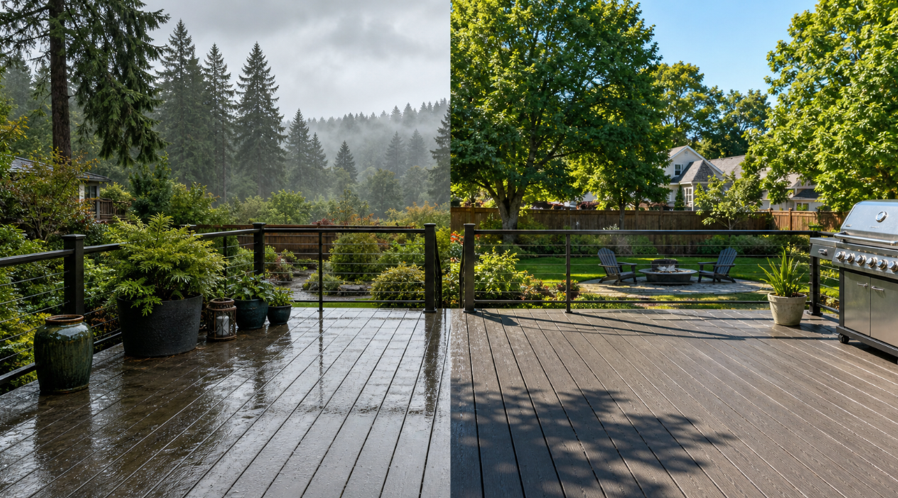
Composite doesn’t behave the same way everywhere. Thermal expansion, UV degradation, and moisture retention all respond differently depending on where you live. A product that performs flawlessly in Portland, Oregon, where summers are cool, and rain is constant, is going to face a completely different set of stresses in Atlanta, where summers are brutal, humidity is relentless, and temperature swings between January and July can exceed 90 degrees.
Two climate variables a contractor evaluates before recommending anything:
- Temperature range. The difference between the coldest winter night and the hottest summer afternoon in your area directly affects how much the boards will expand and contract. That number drives expansion gap calculations during installation.
- Moisture exposure. This isn’t just about rainfall. Ground moisture, ambient humidity, shading from trees or structures, and proximity to a pool or lawn irrigation all affect how a board performs over time. A contractor who doesn’t ask about these things is skipping the most important part of the job.
Hot and Humid Climates: Georgia and the Southeast
In the Southeast, four things work against a deck: heat retention, mold pressure, UV fading, and termite risk. Each one affects the material choice differently.
Heat retention is the most immediate issue. Dark composite boards on a south-facing deck in Atlanta can reach surface temperatures above 150 degrees Fahrenheit in July. That’s not a comfortable surface to walk on barefoot, and it also accelerates color fading and puts stress on joints and fasteners. Some advanced PVC products use technology specifically designed to reflect heat and keep surface temperatures significantly lower than standard composites. Light and mid-tone colors also help substantially, and a contractor working in this region should be pushing that conversation early, not leaving it as a last-minute aesthetic choice.
UV fading is another consistent problem in the South. Capped composite boards, where a protective shell wraps around the full board rather than just the surface, hold color noticeably better under sustained Southern sun exposure than uncapped versions.
Mold and mildew pressure is real in any humid climate. “Composite doesn’t rot” is true but incomplete. Some uncapped products can still develop surface mold in shaded or consistently damp spots. Boards with built-in inhibitors and a full protective cap handle this environment better. Product lines like TimberTech Advanced PVC, Trex Transcend Lineage, and Deckorators Voyage are frequently recommended by contractors working in Southeast conditions because of how they handle heat, moisture, and UV simultaneously.
Cold and Freeze-Thaw Climates: Illinois and the Midwest
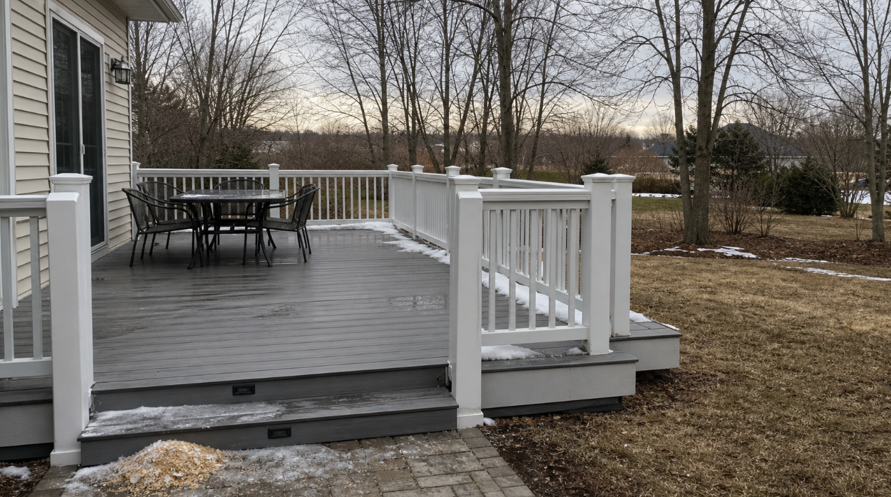
Illinois presents a different set of problems. The main ones are freeze-thaw cycles, snow load, and contact with de-icing salts.
When moisture gets into the micro-pores of a decking board and then freezes, it expands. Do that repeatedly over a few winters, and an uncapped composite will start to show surface damage, small cracks, and delamination. A board with a full four-sided cap keeps moisture out of the core entirely, which is why that construction detail matters more in Chicago than it does in Charleston.
Salt contact is a specific concern that a lot of homeowners don’t think about until after there’s a problem. Standard composite boards can show discoloration and surface degradation when regularly exposed to de-icing chemicals. Before recommending a product for a Midwest install, a good contractor checks the manufacturer’s specifications for salt resistance, not just general durability ratings.
The temperature range in Illinois, from around -10 degrees Fahrenheit in winter to 95 in summer, also requires larger expansion gaps than southern states. Product lines like Trex Transcend with full cap construction, TimberTech Pro Reserve, and Fiberon Symmetry are regularly specified by contractors for Midwest installs because their cold-weather performance data support it.
What “Capped vs. Uncapped” Actually Means
This distinction comes up in almost every composite decking conversation, and it’s worth being clear about what it means in practice.
Uncapped composite is made from a blend of wood fiber and recycled plastic. It’s more affordable, but without a protective outer layer, it’s more vulnerable to moisture absorption, staining, and UV fading in challenging climates.
A capped composite (four-sided cap) has a full plastic shell around the core. That shell is what keeps moisture out, resists staining, and protects the board’s color from sun exposure. In humid or freeze-thaw climates, this construction type is not a premium upgrade. It’s the baseline recommendation.
PVC decking contains no wood fiber at all. It’s the most moisture-resistant option available and the standard choice for coastal areas, poolside installations, and heavily shaded spots where moisture is a constant factor.
Here’s how each climate maps to the right product type:
- Hot and humid climates (Georgia, Southeast): capped composite or PVC with light to mid-tone colors. Heat retention and UV fading are the main concerns, so the protective cap and color choice both matter here.
- Cold and freeze-thaw climates (Illinois, Midwest): four-sided capped composite with verified salt-resistant specs. Moisture getting into the board core during freeze cycles is the primary failure point to avoid.
- Coastal areas: PVC or capped composite with marine-grade ratings. Salt air and constant moisture exposure make full waterproofing a baseline requirement, not an upgrade.
- Moderate or mixed climates: capped composite works as a reliable all-around choice. It handles temperature variation and occasional moisture without the premium cost of full PVC.
Color Is a Climate Decision, Not Just an Aesthetic One
Most homeowners treat color as the last decision. Experienced contractors raise it much earlier, and for good reason.
In hot climates, board color directly affects surface temperature. Dark boards absorb more heat. That creates discomfort for anyone walking on the deck barefoot, accelerates UV fading, and puts additional stress on joints through thermal expansion. In Georgia and similar climates, recommending lighter colors isn’t a stylistic preference. It’s a practical call based on how the board will actually behave through a dozen summers.
In Illinois, color affects something different: how the deck looks and performs after winter salt and snow. Some darker boards show salt residue more visibly and require more careful maintenance during and after winter. Manufacturers like TimberTech and Trex publish actual surface temperature data broken down by product color. A contractor who uses that data in their recommendation is doing the job correctly.
Expansion Gaps Are a Climate-Specific Calculation
Every composite board expands and contracts with temperature. Most homeowners know this. What most don’t know is that the right gap is a specific calculation, not a universal standard.
In Illinois, where the annual temperature swing can exceed 100 degrees, the gap between boards at installation might need to be 3/16 of an inch or more, depending on the product and the ambient temperature on install day. In Georgia, with a smaller temperature swing, the gap is slightly narrower, but humidity adds a moisture-expansion factor that still matters.
Manufacturers publish installation tables that specify the correct gap based on board temperature at the time of installation. An installer who ignores those tables and uses a standard spacer regardless of climate or conditions is creating a problem that will show up later. Too small a gap causes buckling in summer heat. Too large a gap allows debris to collect, creates wind noise, and creates a tripping hazard.
Questions to Ask Before a Product Gets Recommended
Before any composite decking project moves forward, these questions are worth asking directly:
- What climate factors are you accounting for in this recommendation?
- Is this product capped on all four sides or only on the top face?
- What does the manufacturer’s data say specifically about heat retention for this board?
- What expansion gap are you planning to use, and what’s driving that number?
- Have you installed this product in conditions similar to my yard, including sun exposure and moisture?
- What does the warranty cover, and what can void it?
A contractor who answers these questions with specific product knowledge and real installation experience is the one worth hiring. Vague answers to direct technical questions are a signal worth paying attention to.
The Right Material Starts with the Right Questions
The difference between a well-matched composite product and a generic recommendation is years of useful deck life, lower maintenance costs, and a surface that actually performs the way it was supposed to. Experienced composite decking contractors know that the showroom sample is just the starting point. The real work happens when they factor in your climate, your yard conditions, and your usage before they ever suggest a product. Ask those questions early, and the answers will tell you a lot about who you’re working with.
 Founder & Creative Director
Kylor Dornhaven is the kind of writer who genuinely cannot publish something without checking it twice. Maybe three times. They came to home inspiration headlines through years of hands-on work rather than theory, which means the things they writes about — Home Inspiration Headlines, Interior Trends and Layout Ideas, Essential Living Concepts and Styles, among other areas — are things they has actually tested, questioned, and revised opinions on more than once.
That shows in the work. Kylor's pieces tend to go a level deeper than most. Not in a way that becomes unreadable, but in a way that makes you realize you'd been missing something important. They has a habit of finding the detail that everybody else glosses over and making it the center of the story — which sounds simple, but takes a rare combination of curiosity and patience to pull off consistently. The writing never feels rushed. It feels like someone who sat with the subject long enough to actually understand it.
Outside of specific topics, what Kylor cares about most is whether the reader walks away with something useful. Not impressed. Not entertained. Useful. That's a harder bar to clear than it sounds, and they clears it more often than not — which is why readers tend to remember Kylor's articles long after they've forgotten the headline.
Founder & Creative Director
Kylor Dornhaven is the kind of writer who genuinely cannot publish something without checking it twice. Maybe three times. They came to home inspiration headlines through years of hands-on work rather than theory, which means the things they writes about — Home Inspiration Headlines, Interior Trends and Layout Ideas, Essential Living Concepts and Styles, among other areas — are things they has actually tested, questioned, and revised opinions on more than once.
That shows in the work. Kylor's pieces tend to go a level deeper than most. Not in a way that becomes unreadable, but in a way that makes you realize you'd been missing something important. They has a habit of finding the detail that everybody else glosses over and making it the center of the story — which sounds simple, but takes a rare combination of curiosity and patience to pull off consistently. The writing never feels rushed. It feels like someone who sat with the subject long enough to actually understand it.
Outside of specific topics, what Kylor cares about most is whether the reader walks away with something useful. Not impressed. Not entertained. Useful. That's a harder bar to clear than it sounds, and they clears it more often than not — which is why readers tend to remember Kylor's articles long after they've forgotten the headline.