
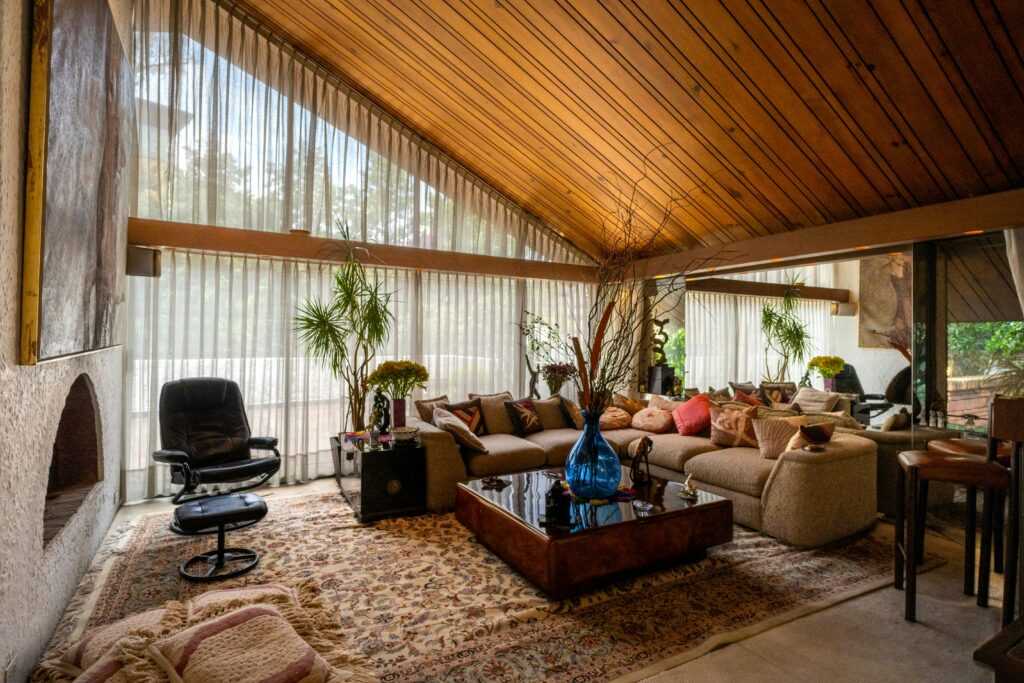
Tired of fighting for space on every table, shelf and counter in your home?
Little rooms get cluttered quickly. One lamp here, some mail there… suddenly all the flat surfaces are covered.
Clutter doesn’t even look organized. Research conducted in 2025 showed that people who perceived their home as cluttered had lower levels of well-being and less life satisfaction.
Here’s the problem:
The typical solution to clutter is to purchase additional storage. More boxes. Bigger baskets. Extra side tables.
But in a compact room, that only makes things worse.
The solution is clutter-conscious design. It involves shifting useful, everyday objects off your surfaces and onto walls, into concealed storage or, better yet, out of the house.
This guide presents the easiest DIY designs to help create free space in small rooms. Time to dive in!
Inside this guide:
- Why Small Rooms Get Cluttered So Fast
- Get Your Lighting Off The Tables
- Build Up, Not Out
- Choose Furniture That Works Twice As Hard
- Let Art Do The Decorating
- Keep It Clear For Good
Why Small Rooms Get Cluttered So Fast
Homes are shrinking. New apartments are coming onto the market in Philadelphia at about 100 square feet smaller than they were ten years prior. That’s about the size of your home office… disappeared.
Smaller floor area makes your furniture multi-task. Every flat surface is also a home for keys, chargers, remotes and assorted doodads.
Think about it:
The average American home contains about 300,000 things. However the average person only utilizes a fraction of what they own. Everything else just clutters up space you don’t have.
Less space + the same amount of stuff = Clutter.
Here’s the good news. Small rooms react instantly to intelligent design. Just a couple of simple tricks can double the perception of space.
Get Your Lighting Off The Tables
This is the easiest win on the list…
Table lamps and floor lamps consume a massive amount of real estate in a small room. Just the base alone takes up valuable space on your side table or in a corner. Moving your lighting higher and away from those surfaces opens up your space instantly.
How it works: Replace bulky lamps with wall lights or sleek picture lights for artwork. Picture lights for artwork are installed directly above a frame pointing down, illuminating your favorite artwork without using any valuable table or shelf space. Your walls work for you and your surfaces remain clutter free.
And the best part?
Lighting has a dramatic impact on the atmosphere in a room. A brightly lit room feels spacious and airy. Meanwhile dark recesses create a closed-in feeling in an otherwise small room.
A few tips to get it right:
- Pick slim fixtures with a low profile
- Use warm bulbs to keep the room cosy
- Match each picture light to roughly half the width of the frame
Plug-in and battery-powered options also exist, so renters don’t need to worry about wiring.
Build Up, Not Out
When floor space is tight, look up.
The walls are your biggest unused storage area in any small room. People tend to only use the bottom half of any space and leave what’s above head level empty.
Floating Shelves
Floating shelves offer storage without taking up the space of an entire bookcase. They keep floors open which creates the illusion of more space.
But don’t fall into the trap of filling every shelf…
Allow for white space. Try to leave at least one third of each shelf empty. Empty space makes shelves look styled, rather than cluttered.
Over-Door And Tall Storage
The backs of doors are blank space. Hang hooks, racks and slim profile organisers on them to store coats, bags, towels and shoes without taking up any floor or surface area.
Slim cabinets that are tall are also a good choice. They reach up to the ceiling and maximize your rooms height rather than it’s width.
Choose Furniture That Works Twice As Hard
In a small room, every piece of furniture should earn its place.
Multi-use furniture is amazing. It allows you to have the function of two pieces without actually having two pieces. Some favorites are:
- Storage ottomans: a seat, a footrest and a hidden storage box in one
- Beds with drawers: perfect for linen, shoes and off-season clothes
- Wall-mounted desks: they fold away when you’re done working
- Nesting tables: pull them out when guests arrive, stack them away after
Another thing to look for are pieces that have legs. Furniture that is raised off of the ground allows light to stream underneath which helps a room feel lighter and more airy.
Win-win, right?
Let Art Do The Decorating
Here’s something most people get wrong…
They cram tiny decorations into tiny rooms. Candle sticks, knick knacks, picture frames fill every ledge and surface. Each one is cute by itself. Cumulatively, they look cluttered.
The fix? Go bigger and go fewer.
Trade ten little pieces of art for one or two large statement pieces on the wall. One large canvas anchors the room and doesn’t take up any surface space.
Add picture lights for artwork to highlight that piece and make it the focal point of the room. The warm glow leads your eye up and along the wall, giving the illusion of a higher ceiling and more width. Galleries have been doing this for years. It works in your studio too.
Gallery walls can work too… As long as you use matching frames and keep the spacing tight & uniform. Random frames placed randomly just adds to the clutter.
Keep It Clear For Good
Design will only take you so far. There are some simple behaviors required to maintain clean surfaces.
Try these:
- One in, one out: every time something new comes in, something old goes
- A place for everything: if something doesn’t have a place it ends up on top of a table
- The 10-minute reset: spend ten minutes each evening putting things back
The 10-minute reset is the most important. It prevents small tasks from becoming mountains. It’s also short enough that it’s easy to maintain.
Don’t aim for perfect either. Progress beats perfection every single time.
Bringing It All Together
Clutter-free decorating is simple. Eliminate the clutter from surfaces and you’ll go a long way toward achieving a tranquil, open and airy feel in a small room.
To quickly recap:
- Move lighting off tables and onto the walls
- Use picture lights for artwork to spotlight one or two statement pieces
- Build storage up, not out
- Choose furniture that does double duty
- Build daily habits that keep surfaces clear
Begin with a single room. Choose one concept from this list and implement today… Watch your room instantly expand.
 Founder & Creative Director
Kylor Dornhaven is the kind of writer who genuinely cannot publish something without checking it twice. Maybe three times. They came to home inspiration headlines through years of hands-on work rather than theory, which means the things they writes about — Home Inspiration Headlines, Interior Trends and Layout Ideas, Essential Living Concepts and Styles, among other areas — are things they has actually tested, questioned, and revised opinions on more than once.
That shows in the work. Kylor's pieces tend to go a level deeper than most. Not in a way that becomes unreadable, but in a way that makes you realize you'd been missing something important. They has a habit of finding the detail that everybody else glosses over and making it the center of the story — which sounds simple, but takes a rare combination of curiosity and patience to pull off consistently. The writing never feels rushed. It feels like someone who sat with the subject long enough to actually understand it.
Outside of specific topics, what Kylor cares about most is whether the reader walks away with something useful. Not impressed. Not entertained. Useful. That's a harder bar to clear than it sounds, and they clears it more often than not — which is why readers tend to remember Kylor's articles long after they've forgotten the headline.
Founder & Creative Director
Kylor Dornhaven is the kind of writer who genuinely cannot publish something without checking it twice. Maybe three times. They came to home inspiration headlines through years of hands-on work rather than theory, which means the things they writes about — Home Inspiration Headlines, Interior Trends and Layout Ideas, Essential Living Concepts and Styles, among other areas — are things they has actually tested, questioned, and revised opinions on more than once.
That shows in the work. Kylor's pieces tend to go a level deeper than most. Not in a way that becomes unreadable, but in a way that makes you realize you'd been missing something important. They has a habit of finding the detail that everybody else glosses over and making it the center of the story — which sounds simple, but takes a rare combination of curiosity and patience to pull off consistently. The writing never feels rushed. It feels like someone who sat with the subject long enough to actually understand it.
Outside of specific topics, what Kylor cares about most is whether the reader walks away with something useful. Not impressed. Not entertained. Useful. That's a harder bar to clear than it sounds, and they clears it more often than not — which is why readers tend to remember Kylor's articles long after they've forgotten the headline.