Modern interiors often lean toward clean lines, open layouts, and minimal palettes—but many homeowners are left wondering how to keep those spaces from feeling cold or impersonal. If you’re searching for practical, stylish ways of adding character to modern homes, this article is designed to give you clear, actionable guidance that works in real spaces.
We break down the essential design principles behind layering texture, incorporating statement pieces, balancing old with new, and using color and materials intentionally—so your home feels curated rather than cluttered. Instead of vague inspiration, you’ll find structured ideas rooted in current interior trends, proven styling techniques, and real-world functionality.
Our approach draws on in-depth research into evolving interior aesthetics, practical living concepts, and prize-worthy design strategies that prioritize both beauty and everyday usability. By the end, you’ll understand not just what to add—but why it works—and how to apply it confidently in your own space.
Contemporary homes often default to white walls, clean lines, and minimal décor. However, personalization begins with contrast. Start by layering texture: pair polished concrete floors with a handwoven rug or matte cabinets with brass hardware. Next, curate statement pieces that tell a story, such as travel art or a vintage chair reupholstered in bold fabric. For example, a monochrome living room instantly warms up with a gallery wall of family photography. Additionally, experiment with lighting—swap recessed fixtures for sculptural pendants. These small, deliberate shifts are key to adding character to modern homes without sacrificing simplicity. Think beyond predictable showroom setups.
The Power of Texture: Layering Materials for Depth and Warmth
Step into many new-build condos in places like downtown Seattle or Toronto’s Liberty Village and you’ll notice the same thing: glass, steel, quartz, repeat. Sleek? Absolutely. Inviting? Not always. The overuse of hard, reflective surfaces can make even a well-designed space feel acoustically harsh and visually flat.
Some designers argue that minimalism should stay pure—clean lines, no “visual noise.” And yes, restraint matters. But warmth doesn’t equal clutter. It means contrast.
Start with architectural texture:
- Fluted wood paneling on an accent wall (a favorite in Scandinavian-inspired interiors) introduces rhythm and shadow.
- Limewash or Venetian plaster adds subtle movement; unlike flat paint, it shifts tone throughout the day as natural light changes.
Then layer tactile elements:
- Bouclé lounge chairs for nubby softness.
- Raw silk cushions for a gentle sheen against matte finishes.
These choices are key to adding character to modern homes without sacrificing sophistication.
For everyday optimization, anchor open-plan living areas with a wool rug to absorb echo (a common issue in loft-style spaces), drape linen curtains slightly beyond window frames for fullness, and fold a textured throw over streamlined sofas. Pro tip: vary scale—pair chunky knits with smoother weaves to avoid visual monotony.
Texture, thoughtfully layered, turns sterile into soulful.
Lighting as Sculpture: Making Illumination a Focal Point
Recessed lights have long been the default (safe, subtle, predictable). But shifting perspective means seeing lighting as ART, not just utility. When you treat illumination as sculpture, you instantly elevate a room from functional to unforgettable.
Statement Pieces That Command Attention
Large-scale pendant lights are leading this movement. Think oversized artisanal glass globes above a dining table or a dramatic brushed-metal fixture suspended in a double-height living room. Woven natural fibers add warmth, while hand-blown glass introduces organic texture and individuality. One bold fixture can anchor a space the way a fireplace once did (yes, it’s that powerful).
Some argue statement lighting overwhelms a room. In reality, when scale matches ceiling height and room size, it creates balance—not chaos. Measure carefully before purchasing.
Mastering a Layered Lighting Strategy
To make sculptural lighting work, you need three layers:
- Ambient lighting: overall illumination (ceiling fixtures, recessed lights)
- Task lighting: focused light for reading or cooking
- Accent lighting: dramatic highlights for art or architectural details
Without layers, even the most beautiful fixture feels flat.
Prize-Worthy Architectural Techniques
Integrated LED strips in joinery, toe-kick lighting, and cove illumination create seamless glow lines that define zones. This technique is especially effective in open-concept homes, subtly adding character to modern homes while maintaining clean lines. Pro tip: Choose warm white (2700K–3000K) to avoid a clinical feel.
Integrated and Invisible: The Art of Smart Storage

Minimalism looks effortless on Instagram. Real life? Not so much. Shoes pile up, appliances crowd countertops, and suddenly that serene space feels staged rather than lived in. The contemporary challenge is clear: how do you maintain clean lines without pretending you don’t own stuff?
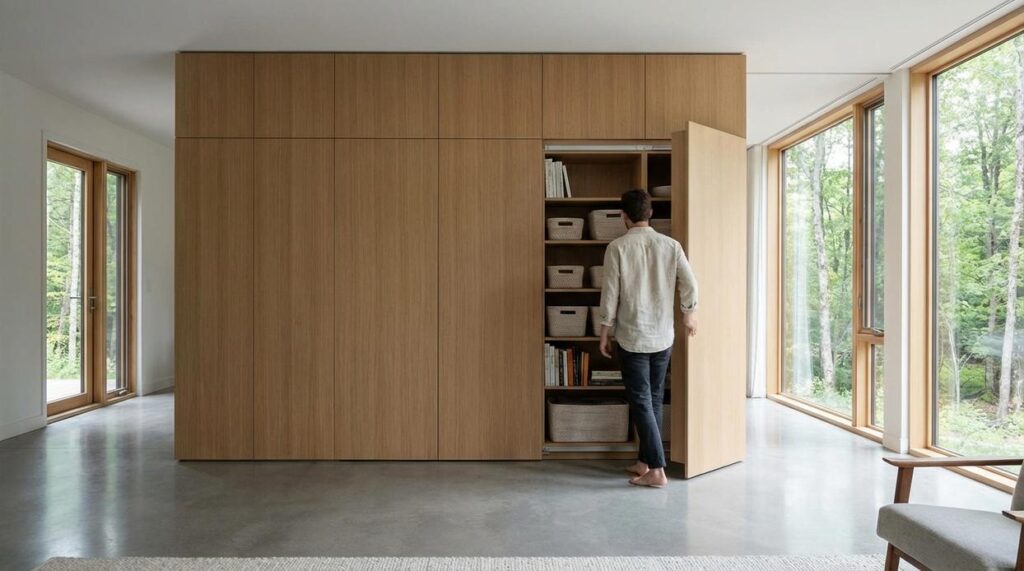
The answer lies in integrated storage—custom joinery designed to blend seamlessly with a home’s architecture. Instead of adding bulky furniture, storage becomes part of the structure itself. Think floor-to-ceiling, handle-less cabinetry finished in the same tone as the walls, creating the illusion of a continuous surface. The benefit isn’t just visual calm; it’s spatial efficiency. Full-height units maximize vertical square footage, a crucial advantage in urban homes where every inch counts (National Association of Home Builders notes storage remains a top buyer priority).
In kitchens, hidden appliance garages conceal toasters and coffee machines behind retractable panels, keeping countertops clear while preserving convenience. Built-in wall niches—precisely measured recesses carved between studs—offer display space without protruding shelves, subtly adding character to modern homes.
Skeptics argue custom solutions cost more upfront. True. But integrated systems reduce clutter, improve organization, and often increase resale appeal—features buyers consistently rank highly (Zillow housing trend reports).
Well-designed storage isn’t decorative fluff; it’s foundational. It shapes daily routines, lowers visual stress, and supports essential living. For more practical upgrades, explore 10 home inspiration ideas that instantly refresh your space.
Biophilic Design: Weaving Nature into the Modern Interior
Biophilic design is more than scattering houseplants across a shelf; it’s about building a daily, sensory dialogue with nature. Think cool travertine under bare feet, marble with an unpolished, velvety edge catching afternoon light. Large-format windows frame rustling trees like living paintings, while interior courtyards or atriums let birdsong and fresh air drift inside.
The rise of living walls turns greenery into breathing art—lush vertical gardens that soften sound, filter air, and faintly scent a room with damp earth after watering. Skeptics argue this is high-maintenance or costly. Yet even small shifts can echo the outdoors:
- Natural wood tones that glow warmly at dusk
- Botanical prints that whisper of forests and fields
These details excel at adding character to modern homes, proving connection doesn’t require a full renovation. Sometimes it’s subtle grain, play of shadow, quiet inhale of greenery that calms mind.
Modern spaces often look polished yet feel impersonal. While some argue minimalism should stay untouched, that restraint can slip into sterility. The real opportunity lies in adding character to modern homes through layered textures, sculptural lighting, and integrated storage that hides clutter without hiding personality. Think linen against concrete, or a vintage lamp glowing like a scene from a Nancy Meyers film. Unlike trend-driven guides, this approach prioritizes well-being and longevity (because nobody wants a showroom forever). Start small: swap one fixture or introduce natural wood. Momentum builds, and suddenly the space feels unmistakably yours. That is lasting design truly.
Bring Warmth and Personality Back Into Your Space
You started this journey looking for ways to make your space feel less flat, less predictable, and more like you. Now you have the inspiration and practical ideas to start adding character to modern homes without sacrificing clean lines or functionality.
Modern spaces often struggle with one major pain point: they look polished but feel impersonal. The right textures, statement pieces, layered lighting, and meaningful details transform a space from showroom-perfect to truly lived-in. When you thoughtfully blend trend-forward elements with timeless touches, your home stops feeling generic and starts telling your story.
Now it’s time to act. Choose one room. Add a bold accent, mix in natural materials, or layer in art and textiles that reflect your personality. Small, intentional updates create lasting impact.
If you’re ready to elevate your space with expert-backed design insights and proven styling techniques trusted by thousands of home enthusiasts, explore more inspiration and practical guides today. Your home deserves more than minimal—it deserves character. Start transforming it now.