

If you’re searching for fresh ways to transform your home into a brighter, more connected, and functional space, this guide to open concept living design delivers exactly what you need. Homeowners today want interiors that feel expansive without sacrificing comfort—and understanding how to balance layout, light, texture, and flow is the key to getting it right.
In this article, you’ll discover practical design techniques, emerging interior trends, and everyday optimization tips that make open layouts both beautiful and livable. From defining zones without walls to selecting cohesive color palettes and statement pieces, we break down the elements that elevate a space from simply “open” to thoughtfully designed.
Our insights are grounded in extensive research into current interior trends, proven spatial planning principles, and real-world design strategies that prioritize both style and function. Whether you’re renovating or refreshing your space, you’ll gain clear, actionable ideas to create a home that feels intentional, inviting, and effortlessly modern.
Many homes feel boxed in. “Why does it feel so dark in here?” a client once asked as we stood between three narrow doorways. That question captures the problem: compartmentalization blocks light and conversation.
Open floor plans remove barriers, but open concept living design goes further. It uses zoning—defining areas with rugs, lighting, or furniture placement—to create purpose without walls. For example, a sectional can anchor a living zone while pendant lights signal the dining area.
Some argue walls add privacy. Fair point. However, strategic screens and sound-absorbing textiles (materials that reduce echo, per Architectural Digest) balance openness with comfort.
The Foundation: Core Principles of Open Floor Plan Design
At its core, an open floor plan removes structural walls to merge the kitchen, dining, and living areas into one cohesive space. In other words, it prioritizes connection over compartmentalization. According to the National Association of Home Builders, over 80% of new single-family homes now feature partially or fully open layouts, reflecting clear buyer demand.
So why the appeal? First, natural light travels farther without barriers, reducing daytime energy use. Second, improved traffic flow makes daily routines and entertaining smoother (no more hallway bottlenecks during dinner parties). Psychologically, larger sightlines can make a home feel more expansive—an effect supported by environmental design studies on spatial perception.
However, the biggest misconception is that it creates one undefined room. In reality, successful open concept living design relies on intentional zoning.
| Zone | Purpose | Design Tool |
|---|---|---|
| Kitchen | Prep & cook |
Island anchors |
| Dining | Gather & eat | Lighting defines |
| Living | Relax & host | Rugs frame area |
Creating Definition Without Walls: How to Zone Your Space
Open layouts are beautiful—but without structure, they can feel like a furniture showroom after a windstorm. If you’re working with open concept living design, your goal is to create visual boundaries (subtle cues that signal where one area ends and another begins) without building actual walls.
Strategic Furniture Groupings
Start with your sofa. Position the back of it toward the dining area to act as a “soft wall.” Add a slim console table behind it to create a transition zone for lighting or décor. This technique is called furniture anchoring—using large pieces to ground a space. Pro tip: keep at least 30–36 inches of walking clearance behind seating for comfortable flow (NKBA guidelines).
Some argue open layouts should remain uninterrupted for flexibility. But without anchors, rooms lose purpose (and purpose is what makes a home feel intentional).
The Power of Area Rugs
Use distinct area rugs to define each zone. A rug under the living room seating and another beneath the dining table creates instant separation. Choose complementary colors to maintain cohesion. Interior designers consistently cite rugs as the most effective zoning tool because they visually “frame” activity areas (Architectural Digest).
Architectural Anchors
Highlight natural focal points like a kitchen island or large dining table. These act as functional hubs—central pieces that organize movement and attention.
Lighting as a Divider
Install a bold pendant over the dining table, recessed lighting in the kitchen, and floor lamps in the living room. Lighting temperature and placement create psychological boundaries (yes, lighting affects mood—just ask any movie set designer).
• Anchor with furniture
• Separate with rugs
• Define with lighting
Choose intention over emptiness. Your space will instantly feel curated, not chaotic.
The Unifying Thread: Achieving a Cohesive and Harmonious Look
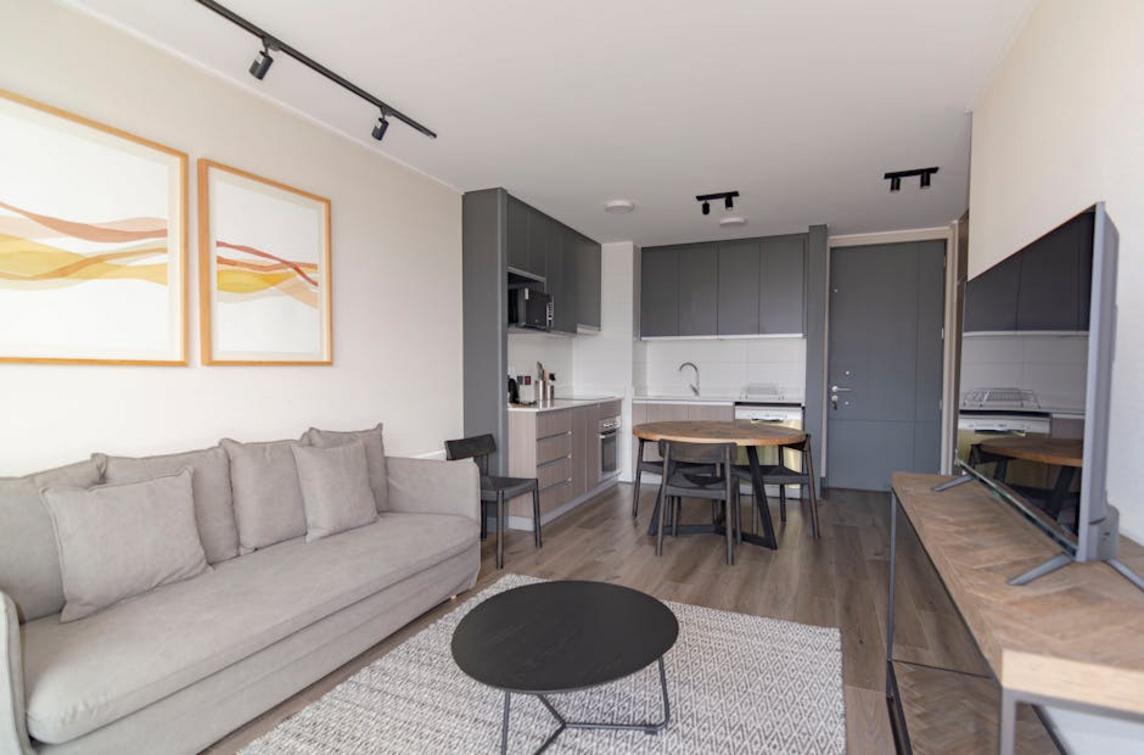
If you want a space that feels intentional—not accidental—cohesion is non-negotiable. In any open concept living design, visual flow determines whether your home feels expansive or chaotic (and no one wants their living room arguing with their kitchen).
Start with consistent flooring. Choose one material—hardwood, LVP (luxury vinyl plank, a durable wood-look alternative), or tile—and run it throughout the entire shared area. Designers widely recommend continuous flooring to create perceived spaciousness and unity (Houzz, 2023). Switching materials midstream instantly chops up the room.
Next, lock in a unified color palette. Select three to five core colors and repeat them across zones. For example:
- A warm white for walls
- Natural oak tones in furniture
- Matte black or brass accents
This creates a visual language your eye understands. (Think of it as your home’s dress code.)
Repeat materials and textures for rhythm. If your kitchen features brass hardware, echo that brass in a living room lamp. Mirror wood tones from your dining table in shelving or frames. Repetition builds harmony through familiarity.
For even greater clarity, explore these minimalist living principles and practical applications: https://livpristhouse.com/minimalist-living-principles-and-practical-applications/.
Pro tip: Before buying anything new, ask, “Does this repeat or reinforce what I already have?” If not, reconsider.
Solving Common Open-Concept Challenges
Open layouts look stunning in photos. But living in them? That’s where the cracks start to show.
If you’ve embraced open concept living design, you’ve probably noticed how every little thing carries. The clang of a pan. The whir of the dishwasher. The TV competing with a blender. It’s enough to make you miss walls (who knew?).
Challenge #1: Noise Control
Sound travels fast when nothing stops it. Hard floors and bare walls only amplify the chaos.
- Add thick area rugs to absorb echoes
- Choose upholstered sofas and chairs over sleek, hard materials
- Hang heavy curtains to soften sound
- Install acoustic panels disguised as art (form and function)
Challenge #2: Clutter Is Always Visible
One messy countertop suddenly makes the entire space feel chaotic. There’s no “just close the door” option.
- Install appliance garages
- Opt for deep pantry cabinets
- Choose storage ottomans or media consoles with hidden compartments
Challenge #3: Lack of Coziness
Large rooms can feel cold and impersonal.
Layer warm lighting, group furniture into conversation zones, and pile on texture—pillows, throws, plants. Softness invites people in.
Because no one wants their dream layout to feel like an echoey showroom.
Designing a brighter, more connected home is less about knocking down walls and more about intention. You already know the strategies; now it’s time to use them with purpose. In my view, the magic of open concept living design happens when zones feel distinct yet inseparable—like the best ensemble casts on TV. CONNECTION matters.
Start with a simple sketch. Outline rugs, sofas, and traffic flow before lifting a finger.
- Define conversation areas
- Balance light and scale
This small step forces clarity and prevents expensive guesswork. Some argue spontaneity sparks creativity, but I believe structure actually unlocks it. INTENTION wins, always.
Bring Your Space Together with Confidence
You came here looking for clarity on how to make your home feel more connected, functional, and beautifully cohesive. Now you understand how open concept living design removes barriers, improves flow, and transforms everyday living into a seamless experience.
A disconnected layout can make even the most stylish home feel cramped and inefficient. But with the right design approach, you can create a space that feels larger, brighter, and intentionally designed for real life.
The next step is simple: start planning your layout with purpose. Identify walls that limit light and movement, define functional zones with furniture placement, and choose cohesive finishes that unify your space.
If you’re ready to stop feeling boxed in and finally create a home that flows effortlessly, explore our expert-backed design insights and proven layout strategies today. Join thousands of inspired homeowners who trust our guidance to turn ordinary spaces into standout living environments. Start transforming your home now.
 Head of Interior Trends & Concepts
Wayne Lewisignest is the kind of writer who genuinely cannot publish something without checking it twice. Maybe three times. They came to hidden gems through years of hands-on work rather than theory, which means the things they writes about — Hidden Gems, Everyday Home Optimization Tips, Essential Living Concepts and Styles, among other areas — are things they has actually tested, questioned, and revised opinions on more than once.
That shows in the work. Wayne's pieces tend to go a level deeper than most. Not in a way that becomes unreadable, but in a way that makes you realize you'd been missing something important. They has a habit of finding the detail that everybody else glosses over and making it the center of the story — which sounds simple, but takes a rare combination of curiosity and patience to pull off consistently. The writing never feels rushed. It feels like someone who sat with the subject long enough to actually understand it.
Outside of specific topics, what Wayne cares about most is whether the reader walks away with something useful. Not impressed. Not entertained. Useful. That's a harder bar to clear than it sounds, and they clears it more often than not — which is why readers tend to remember Wayne's articles long after they've forgotten the headline.
Head of Interior Trends & Concepts
Wayne Lewisignest is the kind of writer who genuinely cannot publish something without checking it twice. Maybe three times. They came to hidden gems through years of hands-on work rather than theory, which means the things they writes about — Hidden Gems, Everyday Home Optimization Tips, Essential Living Concepts and Styles, among other areas — are things they has actually tested, questioned, and revised opinions on more than once.
That shows in the work. Wayne's pieces tend to go a level deeper than most. Not in a way that becomes unreadable, but in a way that makes you realize you'd been missing something important. They has a habit of finding the detail that everybody else glosses over and making it the center of the story — which sounds simple, but takes a rare combination of curiosity and patience to pull off consistently. The writing never feels rushed. It feels like someone who sat with the subject long enough to actually understand it.
Outside of specific topics, what Wayne cares about most is whether the reader walks away with something useful. Not impressed. Not entertained. Useful. That's a harder bar to clear than it sounds, and they clears it more often than not — which is why readers tend to remember Wayne's articles long after they've forgotten the headline.