

If your home feels boxed in, dim, or disconnected, you’re not alone. Many traditional layouts divide everyday living into separate rooms that limit light, restrict movement, and make gatherings feel crowded. That’s why more homeowners are exploring the open concept living benefits that come with removing unnecessary walls and creating a unified space. This article directly answers your questions by outlining the clear advantages of open-plan design—from improved natural light and better flow to stronger social connection and elevated visual appeal. Grounded in proven, prize-worthy design principles, you’ll discover how an open layout can completely transform how your home looks, feels, and functions.
Cultivating Connection: The Social Heart of the Home
An open layout does more than remove walls; it removes barriers between people. By merging the kitchen, dining, and living areas, conversation flows as easily as Sunday morning coffee. Parents can chop vegetables while discussing homework, and siblings can sprawl on the sofa without feeling disconnected. In practice, this design supports enhanced family interaction because sightlines remain open across zones.
However, some critics argue that open plans sacrifice privacy and amplify noise. That can be true; yet, thoughtful details such as acoustic panels, large area rugs, and strategically placed islands absorb sound while preserving connection. Moreover, effortless entertaining becomes a built-in feature. The host stirs sauce at a quartz island with bar seating and never misses the punchline of a friend’s story (think Thanksgiving in a Nancy Meyers movie).
For families, parental peace of mind is another tangible gain. You can answer emails at the dining table while supervising playtime, thanks to uninterrupted visual access. Consequently, the space evolves into a central hub, a true command center where calendars, conversations, and celebrations intersect. These open concept living benefits ultimately transform square footage into shared experience. Connection becomes the home’s defining design feature.
Maximizing Natural Light and the Illusion of Space
Uninterrupted Light Flow
Option A: segmented rooms with multiple interior walls. Option B: an open layout with fewer barriers. The difference isn’t just aesthetic—it’s physics. Light travels in straight lines, and every wall interrupts its path, absorbing or blocking illumination. Remove those barriers, and sunlight from a single window can penetrate deeper into the home, brightening adjacent zones naturally. (Yes, it’s basically letting light do what it already wants to do.) The result is lower reliance on artificial lighting and a softer daytime glow—one of the core open concept living benefits.
Making Small Spaces Feel Larger
In a closed plan, each room visually “ends” at its walls. In an open plan, the eye travels uninterrupted. That continuous line of sight creates perceived spaciousness, even if the square footage hasn’t changed. Think studio apartment vs. chopped-up micro-rooms—the former almost always feels bigger.
- Closed plan: defined but confined
- Open plan: connected and expansive
Some argue walls create coziness. True. But openness delivers flexibility and flow.
Highlighting Views
With fewer partitions, outdoor views become shared focal points. A garden or skyline can anchor the entire living space, not just one room.
Design Technique
Place mirrors opposite windows to reflect daylight deeper inside. Pro tip: choose oversized mirrors to double both brightness and perceived depth.
The Ultimate in Versatile and Multifunctional Design
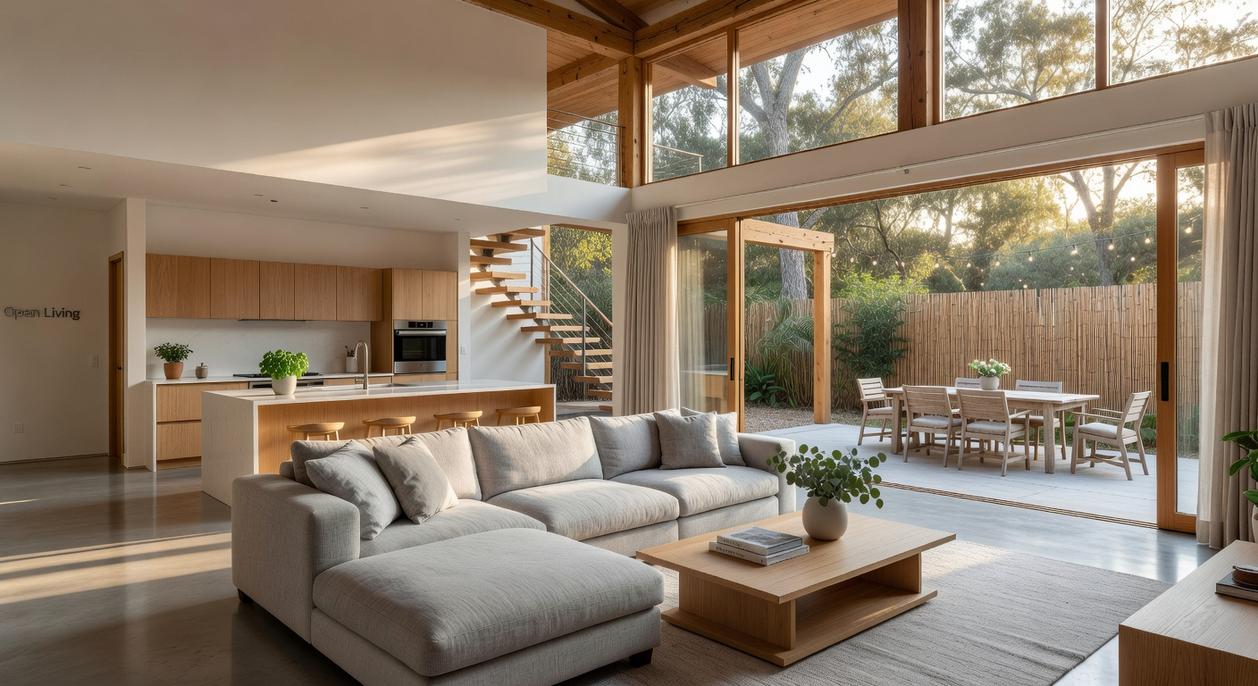
I once believed more walls meant more function. I was wrong. The magic is in flexible furniture layouts that shift effortlessly—from a large dinner party setup to a cozy movie night lounge, or even a pop-up home office by the window. (Spoiler: lightweight chairs save friendships during last-minute rearranging.)
Creating distinct zones without construction is simpler than I thought:
- Area rugs anchor conversation spaces.
- Sofas and consoles act as subtle dividers.
- Layered lighting signals purpose and mood.
These strategies highlight real open concept living benefits while avoiding the cavernous feel critics often warn about. Some argue walls provide necessary structure. True—but thoughtful zoning delivers clarity without confinement.
Adaptable living matters most over time. I’ve seen a toddler’s play corner evolve into a focused teen study nook—no demolition required. The key? Invest in pieces inspired by timeless interior styles that never go out of fashion so your space grows gracefully, not chaotically.
When comparing an open plan to a traditional layout, the difference in movement is immediate. In an open design, the kitchen, dining, and living areas connect seamlessly, creating clear sightlines and fewer barriers. In a traditional setup, hallways narrow traffic, doorways interrupt conversation, and rooms can feel boxed in. That contrast alone highlights real open concept living benefits.
Aesthetically, it is unified versus fragmented. With fewer walls, colors, flooring, and lighting flow together, allowing a cohesive palette to shine. In compartmentalized homes, each room competes for attention, sometimes clashing instead of complementing. Harmony becomes easier when the space itself cooperates.
Resale value tells a similar story. Many modern buyers prioritize flexibility, entertaining space, and natural light. While some argue defined rooms offer privacy, market trends consistently show open layouts command stronger interest and higher offers. If marketability matters, openness often wins. Buyers notice flow the moment they walk in inside.
Open living isn’t just a design trend; it’s everyday optimization in action. Without dividing walls, air circulates more freely, which can reduce temperature gradients between rooms and make HVAC systems work more efficiently (the U.S. Department of Energy notes that improved airflow can lower heating and cooling demand). In practical terms, that means fewer upstairs bedrooms and less overworked AC in July.
An open plan also spotlights what matters. A oak floor, a fireplace, or a coffered ceiling becomes a focal point instead of competing with hallways and doors. When sightlines stretch from kitchen to living area, craftsmanship feels intentional and cohesive.
There’s a lifestyle shift, too. By trimming excess rooms, you embrace essentialism—keeping what’s functional and beautiful, and letting the rest go. The open concept living benefits show up daily:
- Easier furniture flow
- Clearer harmony
- Simpler upkeep routines
(Pro tip: use area rugs to define zones.)
Bring Your Space Together with Confidence
You came here looking for clarity on how to create a home that feels open, functional, and beautifully connected—and now you understand how smart layouts, intentional décor, and flow-focused design choices make that possible. By embracing open concept living benefits like better natural light, improved traffic flow, and stronger connection between spaces, you can finally eliminate the cramped, disconnected feeling that’s been holding your home back.
The truth is, many homeowners struggle with rooms that feel boxed in, cluttered, or out of sync. That frustration doesn’t go away on its own—but the right design strategy changes everything. When you apply these principles, you create a space that works for your daily life while still feeling polished and inviting.
Now it’s time to take action. Start rethinking one key area in your home today—remove one visual barrier, redefine one multifunctional zone, or refresh one focal point. If you want proven inspiration and practical ideas trusted by thousands of design-savvy homeowners, explore more expert-backed living concepts now and transform your space into one that truly flows.
 Founder & Creative Director
Kylor Dornhaven is the kind of writer who genuinely cannot publish something without checking it twice. Maybe three times. They came to home inspiration headlines through years of hands-on work rather than theory, which means the things they writes about — Home Inspiration Headlines, Interior Trends and Layout Ideas, Essential Living Concepts and Styles, among other areas — are things they has actually tested, questioned, and revised opinions on more than once.
That shows in the work. Kylor's pieces tend to go a level deeper than most. Not in a way that becomes unreadable, but in a way that makes you realize you'd been missing something important. They has a habit of finding the detail that everybody else glosses over and making it the center of the story — which sounds simple, but takes a rare combination of curiosity and patience to pull off consistently. The writing never feels rushed. It feels like someone who sat with the subject long enough to actually understand it.
Outside of specific topics, what Kylor cares about most is whether the reader walks away with something useful. Not impressed. Not entertained. Useful. That's a harder bar to clear than it sounds, and they clears it more often than not — which is why readers tend to remember Kylor's articles long after they've forgotten the headline.
Founder & Creative Director
Kylor Dornhaven is the kind of writer who genuinely cannot publish something without checking it twice. Maybe three times. They came to home inspiration headlines through years of hands-on work rather than theory, which means the things they writes about — Home Inspiration Headlines, Interior Trends and Layout Ideas, Essential Living Concepts and Styles, among other areas — are things they has actually tested, questioned, and revised opinions on more than once.
That shows in the work. Kylor's pieces tend to go a level deeper than most. Not in a way that becomes unreadable, but in a way that makes you realize you'd been missing something important. They has a habit of finding the detail that everybody else glosses over and making it the center of the story — which sounds simple, but takes a rare combination of curiosity and patience to pull off consistently. The writing never feels rushed. It feels like someone who sat with the subject long enough to actually understand it.
Outside of specific topics, what Kylor cares about most is whether the reader walks away with something useful. Not impressed. Not entertained. Useful. That's a harder bar to clear than it sounds, and they clears it more often than not — which is why readers tend to remember Kylor's articles long after they've forgotten the headline.