Decorating your space is tough. Finding the perfect area rug is tougher. It’s like, where do you even start?
You’ve got a blank floor staring back at you. It’s overwhelming. Do you go for something bold or play it safe?
I get it. I’ve been there. Searching for that piece that ties everything together?
It feels impossible sometimes, doesn’t it?
Let’s cut through the noise. You want something that’ll make your room look like a million bucks without spending it. It’s not just about aesthetics.
It’s about how a rug can transform a room’s vibe (and trust me, it can). I’ll give you the lowdown on what to consider, whether it’s materials, size, or style. You’ll walk away knowing exactly what to look for.
Stick around. This article promises to guide you through the maze of options, backed by takeaways from design experts. You’ll soon choose that rug with confidence.
Rule #1: Mastering Rug Size and Placement
Let’s talk about the biggest mistake I see with rugs: size. Picking the wrong size can mess up a room faster than you can say “interior design.” An incorrectly sized rug can make your space feel cramped and chaotic. You don’t want that, trust me.
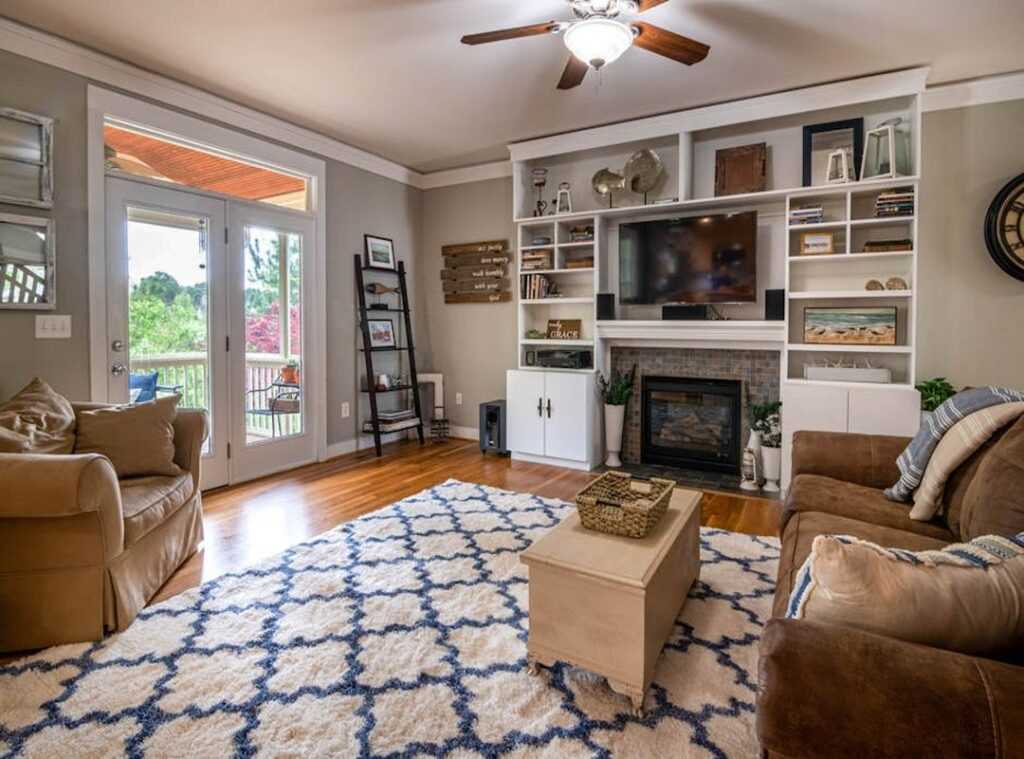
In the living room, there are a few basic rules to follow. First, the all-furniture-legs-on-the-rug rule. It’s great for large, open spaces.
You know those magazine-worthy rooms? They usually have the rug encompassing everything. Then there’s the front-legs-only option.
This one’s versatile and suits most setups. Lastly, there’s the coffee-table-only scenario. Use this in tighter rooms, but remember it might emphasize how small the space really is.
The dining room has its own rulebook. The cardinal rule? Make sure your rug is big enough so all chairs stay on it, even when you pull them out.
Seriously, nothing’s worse than chair legs teetering off the edge. It’s a hazard and an eyesore. Measure your table and add 24-30 inches on all sides for the perfect area rug.
Now, let’s tackle the bedroom. For a King or Queen bed, you can go full coverage (or) put the rug under the bed and past the nightstands. This way, it feels cohesive and luxurious.
Alternatively, go for the two-thirds approach. Start the rug in front of the nightstands. It’s a great middle ground.
Don’t want to shell out too much? Consider runners on each side of the bed. They add comfort without breaking the bank.
The right rug size sets the stage for everything else. It helps in creating harmony and flow. And here’s a pro tip: if you’re going for accent walls bold statements room, make sure your rug complements, not competes.
Nobody wants a room that’s screaming for attention at every corner. Choose wisely and let those walls or art pieces shine.
Choosing the perfect area rug isn’t rocket science, but it does take a bit of planning. Get it wrong, and you’ll feel it every time you step into the room. Get it right, and voilà.
Your room’s a masterpiece!
Decoding Materials: Match Your Rug to Your Lifestyle
The material of a rug isn’t just a detail. It’s everything. The right choice impacts not just how it looks but how it feels underfoot and how long it lasts.
Do you want something that feels luxurious, or are you after something more practical?
Let’s talk wool. It’s the king of natural fibers. Wool is soft, durable, and naturally fights off stains.
Perfect for those who want their homes to scream elegance. It’s a bit of an investment, but one that’s worth it if you’re looking for quality and comfort.
On the other hand, cotton is casual and affordable. Think of it as the laid-back friend you can always count on. It’s washable too, which is why I love it for kitchens or kids’ rooms.
But don’t expect it to last as long as wool. That’s the trade-off.
Then we have the synthetic fibers: polypropylene, nylon, and polyester. These are the workhorses of the rug world. They laugh in the face of high-traffic areas like entryways and family rooms.
Stain resistant and easy to clean, they’re practical but may lack that plush feel wool lovers crave. Still, if you want a perfect area rug for a busy home, don’t overlook them.
Now, the plant-based options: jute and sisal. These fibers are all about that organic, natural vibe. They add texture to a room, making them visually stunning.
But here’s the catch: keep them in low-traffic, dry areas. Spills? A nightmare.
They’re not the easiest to clean, and they can be a bit rough.
So, what’s your pick? Do you go for the luxury of wool, the practicality of synthetics, or the earthy charm of plant fibers? Each has its pros and cons, but choose wisely.
Your home deserves it.
Style and Color: Tying It All Together
Choosing the perfect area rug is like picking the right shoes for an outfit. It can make or break the whole look. You know what I’m talking about, right?

If your room’s already bursting with bold patterns, go for a “Foundation” rug. Think neutral, solid, or with a slight texture. It should complement rather than compete with your furniture and art.
But what if everything’s a bit too plain? That’s when a “Statement” rug struts in. Bold patterns or lively colors can bring life to an otherwise dull room.
It’s like adding a pop of bright red lipstick to a simple black dress. You want a rug that screams personality without overshadowing everything else.
Pro tip: Pull a primary or accent color from existing pillows, curtains, or artwork. This trick makes the room look cohesive and professionally designed. I’ve done it myself, and trust me, it works wonders.
It’s all about creating harmony without the chaos.
Are you still wondering how this aligns with your lighting? Consider mastering art layered lighting. It’s key for setting the mood and can boost the rug’s impact.
You’re not just putting down a rug; you’re crafting a vibe.
So, is your room ready for a transformation? Remember, a rug isn’t just about covering the floor. It’s about crafting a space that feels complete.
Whether you go neutral or bold, let your rug tell a story. Choose wisely, and you’ll thank yourself every time you enter the room.
Rug Revelations: Avoid These 3 Common Blunders
Ever tripped over a rug because it slipped underfoot? That’s probably because you forgot the rug pad. It does more than stop you from face-planting; it extends the rug’s life and adds a plush feel.
Without it, your “perfect area rug” might not be so perfect after all.
Next, buying a rug online without a plan. Rookie mistake. Measure your space, and measure again.
Use painter’s tape to outline where the rug will go. Trust me, it looks different in your head than on your floor.
Finally, pile height matters more than you’d think. A high-pile rug feels great in a bedroom, but under a dining table, it’s a nightmare. Chairs get stuck, crumbs hide, and it just looks messy.
Stick with low-pile or flatweave for high-traffic zones. They let chairs slide and are easier to clean. Why make life harder?
Rugs should simplify, not complicate.
Find Your Rug, Find Your Room’s Soul
A poorly chosen rug can ruin even the best design. But you’re covered now. Follow the steps we’ve laid out: size, material, style.
You’ll end up with a perfect area rug that ties everything together. We’ve all been there, staring at a room that feels incomplete. It’s frustrating, right?
Use these rules as your checklist. Measure your space, visualize, and start hunting for that rug. Transform your room from unfinished to unforgettable.
Need help? Visit livpristhouse.com for inspiration. Don’t wait.
Make your space yours with the right rug. Ready to find it? Start now and see the change.
 Founder & Creative Director
Kylor Dornhaven is the kind of writer who genuinely cannot publish something without checking it twice. Maybe three times. They came to home inspiration headlines through years of hands-on work rather than theory, which means the things they writes about — Home Inspiration Headlines, Interior Trends and Layout Ideas, Essential Living Concepts and Styles, among other areas — are things they has actually tested, questioned, and revised opinions on more than once.
That shows in the work. Kylor's pieces tend to go a level deeper than most. Not in a way that becomes unreadable, but in a way that makes you realize you'd been missing something important. They has a habit of finding the detail that everybody else glosses over and making it the center of the story — which sounds simple, but takes a rare combination of curiosity and patience to pull off consistently. The writing never feels rushed. It feels like someone who sat with the subject long enough to actually understand it.
Outside of specific topics, what Kylor cares about most is whether the reader walks away with something useful. Not impressed. Not entertained. Useful. That's a harder bar to clear than it sounds, and they clears it more often than not — which is why readers tend to remember Kylor's articles long after they've forgotten the headline.
Founder & Creative Director
Kylor Dornhaven is the kind of writer who genuinely cannot publish something without checking it twice. Maybe three times. They came to home inspiration headlines through years of hands-on work rather than theory, which means the things they writes about — Home Inspiration Headlines, Interior Trends and Layout Ideas, Essential Living Concepts and Styles, among other areas — are things they has actually tested, questioned, and revised opinions on more than once.
That shows in the work. Kylor's pieces tend to go a level deeper than most. Not in a way that becomes unreadable, but in a way that makes you realize you'd been missing something important. They has a habit of finding the detail that everybody else glosses over and making it the center of the story — which sounds simple, but takes a rare combination of curiosity and patience to pull off consistently. The writing never feels rushed. It feels like someone who sat with the subject long enough to actually understand it.
Outside of specific topics, what Kylor cares about most is whether the reader walks away with something useful. Not impressed. Not entertained. Useful. That's a harder bar to clear than it sounds, and they clears it more often than not — which is why readers tend to remember Kylor's articles long after they've forgotten the headline.