
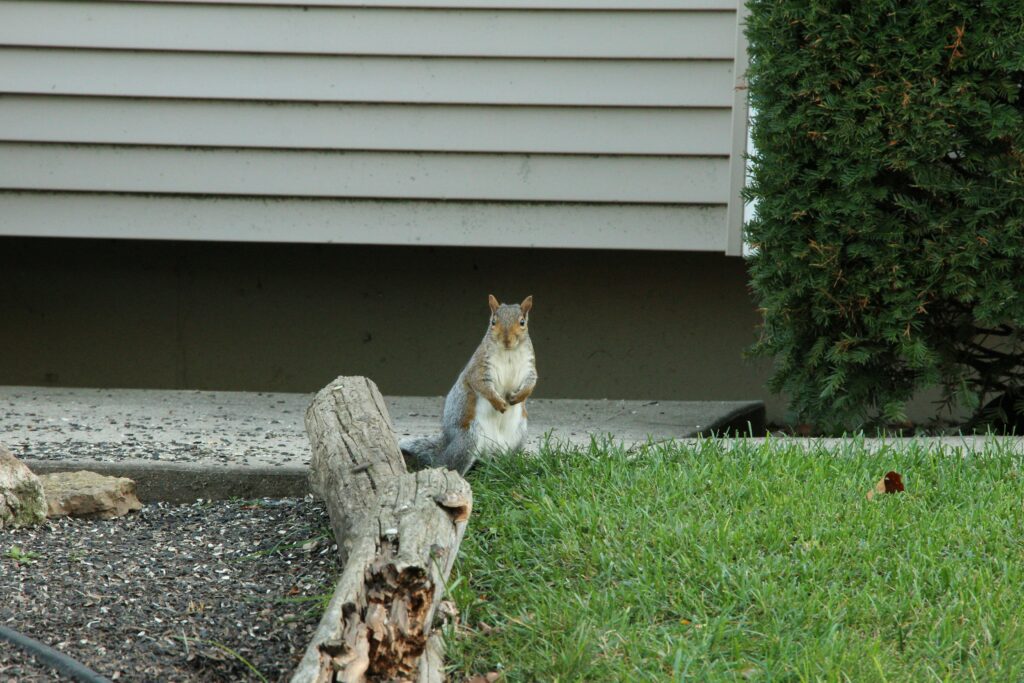
Finding a wild animal in your yard can be surprising. Finding one inside your house is a completely different story. Raccoons, squirrels, opossums, birds, and other wildlife can sometimes find their way into attics, garages, crawl spaces, and other parts of a home while looking for food, water, or shelter.
Fortunately, a few simple changes around your property can make your home much less inviting to unwanted wildlife. Here are seven practical ways to help keep wild animals outside where they belong.
1. Seal Up Small Entry Points
Wild animals don’t need a large opening to get inside. A loose vent, damaged roof section, gap around a pipe, or opening near the foundation can be enough for some animals to squeeze through.
Walk around your home and look for holes, cracks, and damaged screens. Pay particular attention to the roofline, attic vents, chimney areas, and spaces beneath porches or decks.
Repairing these openings can make a big difference. Just make sure you’re certain no animal is already inside before sealing an opening.
2. Keep Food Sources Out of Reach
Wildlife has a strong reason to visit properties where food is easy to find.
Keep garbage cans tightly closed and avoid leaving pet food outside overnight. Fallen fruit from trees should also be picked up regularly, especially if animals have started visiting your yard.
Bird feeders can be another attraction. If you notice raccoons, squirrels, or other animals gathering around them, consider moving feeders farther away from the house or reducing how much food is available.
3. Remove Places Where Animals Can Hide
A quiet, sheltered space can look like the perfect home to a wild animal.
Stacks of firewood, piles of leaves, dense vegetation, unused sheds, and areas beneath decks can all provide shelter. Keeping these areas tidy can make your property less attractive.
Trim overgrown branches and bushes near the house, keep woodpiles raised where possible, and avoid allowing clutter to accumulate around garages and sheds.
If an animal has already moved into one of these spaces, All City Animal Trapping team can help homeowners deal with wildlife problems using professional removal methods.
4. Don’t Ignore Unusual Sounds
Hearing scratching or movement in your attic at night can be unsettling. You may also notice sounds coming from walls, ceilings, or crawl spaces.
Don’t assume the noise will disappear on its own. Animals can damage insulation, wiring, wood, and other parts of a home while moving around or building nests.
Try to identify where the sound is coming from without approaching the animal. If you suspect wildlife has entered the house, professional assistance is usually safer than trying to catch it yourself.
5. Check Your Roof and Attic Regularly
The roof is one of the easiest entry points for certain animals. Damaged shingles, loose vents, broken screens, and gaps around chimneys can give wildlife access to the attic.
A quick visual inspection every few months can help you spot potential problems early. Look for damaged areas, nesting materials, droppings, or other signs that an animal may have been exploring the space.
Fixing damage promptly can help prevent a small opening from becoming a larger wildlife problem.
6. Avoid Leaving Water Sources Outside
Food isn’t the only thing that attracts wildlife. Water can also bring animals onto your property.
Leaking outdoor faucets, standing water, uncovered containers, and poorly maintained birdbaths can provide easy drinking sources. Check around your property after watering plants or heavy rain and remove unnecessary standing water.
You don’t need to eliminate every source of water, but reducing easily accessible water can make your property less appealing to wildlife.
7. Act Quickly When You Notice Signs
Wildlife problems are usually easier to manage when they’re caught early.
Droppings, damaged plants, scratching sounds, nesting materials, unusual odors, or holes around your home can all indicate animal activity. The longer an animal remains on your property, the more opportunity it has to cause damage or establish a nesting area.
If you notice signs of wildlife inside your home, avoid cornering or handling the animal yourself. Different species require different approaches, and some may become defensive when frightened.
A professional wildlife removal service can identify the animal, determine how it entered, and recommend appropriate removal and prevention measures.
Final Thoughts
Keeping wildlife away from your home doesn’t require turning your property into a fortress. Simple habits such as securing garbage, trimming vegetation, repairing openings, and removing easy sources of food and water can make your property much less attractive to unwanted visitors.
Most importantly, don’t ignore the early signs. A little scratching in the attic or a small gap near the roof may seem insignificant today, but dealing with it early can save you from a much bigger problem later.
Frequently Asked Questions
1. What attracts wild animals to residential properties?
Food, water, and shelter are the biggest attractions. Open garbage, pet food, fallen fruit, standing water, overgrown vegetation, and accessible attics or crawl spaces can all make a property appealing to wildlife.
2. Should I seal an opening if I think an animal is inside?
No. Sealing an active entry point can trap an animal inside your home or separate a mother from its young. It’s better to confirm that the space is clear before permanently closing the opening.
3. What should I do if I find a wild animal inside my home?
Keep your distance and keep children and pets away from the animal. Avoid trying to corner or handle it. Contact a professional wildlife removal service that can identify the animal and determine a safe way to remove it.
 Home Optimization Specialist & Content Strategist
Ask Patricia Pickardaycare how they got into essential living concepts and styles and you'll probably get a longer answer than you expected. The short version: Patricia started doing it, got genuinely hooked, and at some point realized they had accumulated enough hard-won knowledge that it would be a waste not to share it. So they started writing.
What makes Patricia worth reading is that they skips the obvious stuff. Nobody needs another surface-level take on Essential Living Concepts and Styles, Prize-Worthy Room Design Techniques, Home Inspiration Headlines. What readers actually want is the nuance — the part that only becomes clear after you've made a few mistakes and figured out why. That's the territory Patricia operates in. The writing is direct, occasionally blunt, and always built around what's actually true rather than what sounds good in an article. They has little patience for filler, which means they's pieces tend to be denser with real information than the average post on the same subject.
Patricia doesn't write to impress anyone. They writes because they has things to say that they genuinely thinks people should hear. That motivation — basic as it sounds — produces something noticeably different from content written for clicks or word count. Readers pick up on it. The comments on Patricia's work tend to reflect that.
Home Optimization Specialist & Content Strategist
Ask Patricia Pickardaycare how they got into essential living concepts and styles and you'll probably get a longer answer than you expected. The short version: Patricia started doing it, got genuinely hooked, and at some point realized they had accumulated enough hard-won knowledge that it would be a waste not to share it. So they started writing.
What makes Patricia worth reading is that they skips the obvious stuff. Nobody needs another surface-level take on Essential Living Concepts and Styles, Prize-Worthy Room Design Techniques, Home Inspiration Headlines. What readers actually want is the nuance — the part that only becomes clear after you've made a few mistakes and figured out why. That's the territory Patricia operates in. The writing is direct, occasionally blunt, and always built around what's actually true rather than what sounds good in an article. They has little patience for filler, which means they's pieces tend to be denser with real information than the average post on the same subject.
Patricia doesn't write to impress anyone. They writes because they has things to say that they genuinely thinks people should hear. That motivation — basic as it sounds — produces something noticeably different from content written for clicks or word count. Readers pick up on it. The comments on Patricia's work tend to reflect that.